202604.16
International Journal on Document Analysis and Recognition (IJDAR)
RESEARCH AREA
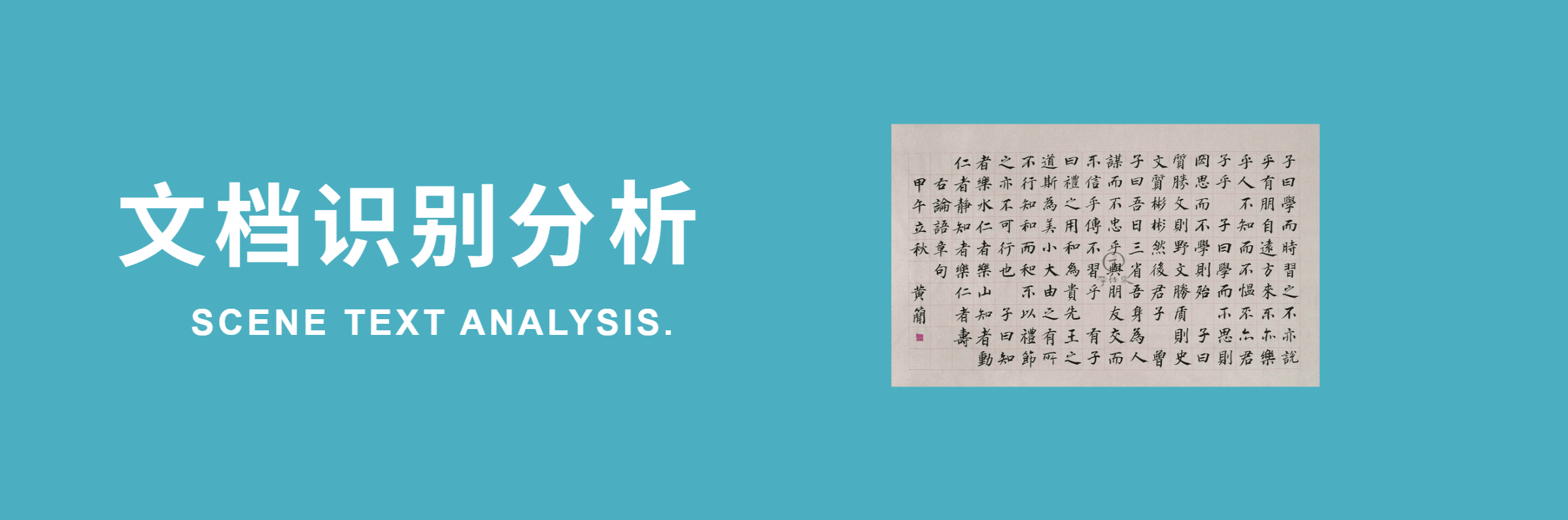
Scene text analysis is a key branch of document recognition and analysis. It focuses on detecting, recognizing and understanding text embedded in natural‑scene images. Major challenges include complex background noise, multi‑scale font variations, uneven illumination, orientation distortion and mixed multilingual content. Deep‑learning models such as CRNN, EAST and Transformer are adopted to achieve end‑to‑end text localization and content parsing. This technology is widely deployed in autonomous‑driving road‑sign recognition, commodity‑packaging information extraction, intelligent security monitoring and social‑media image analysis. Cross‑modal fusion further enhances comprehension of contextual semantic information within scenes.
Ancient document analysis is an important branch of document recognition and analysis. It conducts digital processing and content parsing for cultural heritage artifacts such as historical literature and ancient manuscripts. High‑precision scanning, multi‑spectral imaging and other techniques restore faded or damaged texts. Combined with optical character recognition (OCR) and artificial‑intelligence algorithms, these tools identify variant characters, ancient scripts and special symbols. Physical traits including paper texture, ink composition and binding traces are also analyzed to support damage detection and dating.
Beyond textual digital transcription, this field explores edition genealogy, handwriting characteristics of authors and historical background information, providing interdisciplinary support for academic research, ancient‑document restoration and cultural‑heritage conservation. It balances cultural‑relic preservation with knowledge inheritance.
Handwritten text analysis is a critical area of document recognition and analysis. It targets automatic recognition and understanding of personalized handwritten content. Deep‑learning and pattern‑recognition approaches handle diversities in handwriting styles such as cursive and illegible scripts. Contextual semantics and structural handwriting features are incorporated to boost recognition accuracy. Apart from text transcription, handwriting style and writing pressure can be analyzed for identity verification or forensic handwriting examination. Typical applications include digitalization of historical manuscripts, automated grading of educational assignments, parsing of medical prescriptions and processing of legal documents. It requires strong generalization toward diverse writing habits while respecting privacy, enabling efficient intelligent utilization and management of unstructured handwritten information.